
Beyond Metrics: Racial Identity Development as Anti-Colonial Praxis in Contested Institutional Spaces
Abstract
Amid the escalating attacks on diversity, equity, and inclusion, Historically Black Emerging Hispanic-Serving Institutions (HBeHSIs) represent overlooked spaces of resistance in U.S. Higher education. This study examines how faculty and administrators negotiate racial and professional identities within institutions shaped by Black liberatory traditions and exclusionary HSI policy. Guided by Bradley and Tillis’s Afro-Latinidades heuristic, we link psychosocial identity development to institutional praxis and anti-colonial resistance. Interviews with 10 BIPOC professionals reveal identity ork as collective praxis challenging essentialist narratives and affirming servingness beyond enrollment metrics. Five themes illustrate work as collective praxis challenging essentialist narratives and affirming servingness beyond enrollment metrics. Five themes illustrate strategies for sustaining equity-driven missions under racial retrenchment, calling for renewed commitments to justice-centered higher education.
Keywords:
racial identity development; faculty; race; ethnicity; higher education; emerging HSIs; and HBCU
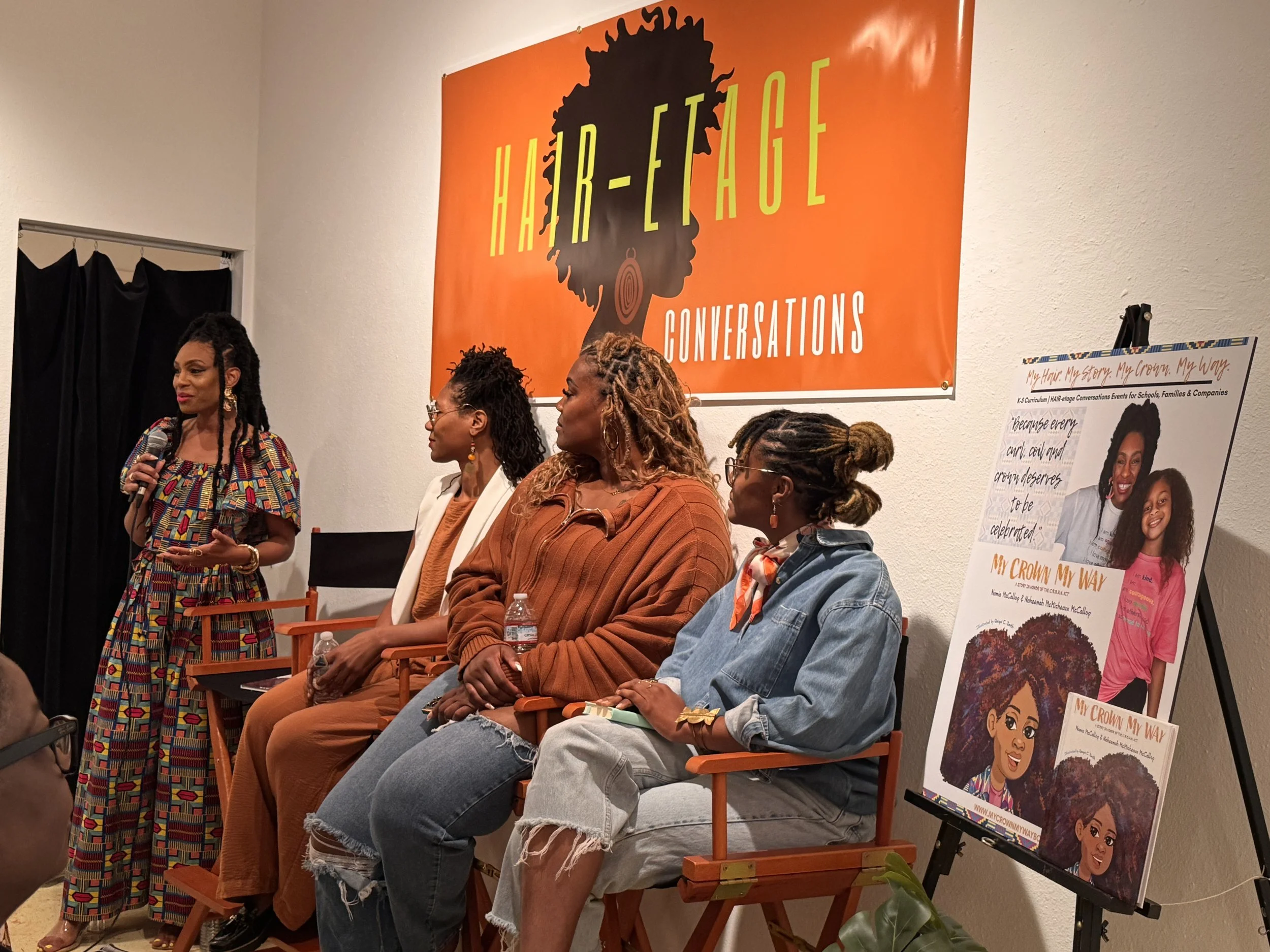
Inaugural HAIR-etage Conversation LIVE
HAIR-etage Conversations LiveTM Inaugural Panelist.
“HAIR-etage is a sacred sensory-rich pop museum experience celebrating beauty, legacy, and power of Black hair through art, storytelling, and wellness in spired by the Crown Act.
The CROWN Act (Creating a Respectful and Open World for Natural Hair) Act was created by four black women, designed to prohibit race-based hair discrimination and stop the denial of employment and educational opportunities for men and women of color based on their textured or protective hairstyles. The act is not a law in all 50 states yet, and without federal legislation, the loophole in the Civil Rights Act of 1964 that protects race but not hair as a trait correlated with race will continue to allow race-based hair discrimination to be legal in public schools and the workplace.
My Crown, My Way is the heartfelt creation of a mother-daughter duo, Naheemah McMicheaux McCallop and her seven-year-old daughter, Namia McCallop. The inspiration behind the book came from their shared desire to create a space for young people to celebrate their natural beauty and cultural heritage. They wanted to tell a story that would inspire youth to recognize that they are a masterpiece—just the way God made them—and that they should never stop dreaming.” (—Naheemah McMicheaux McCallop)
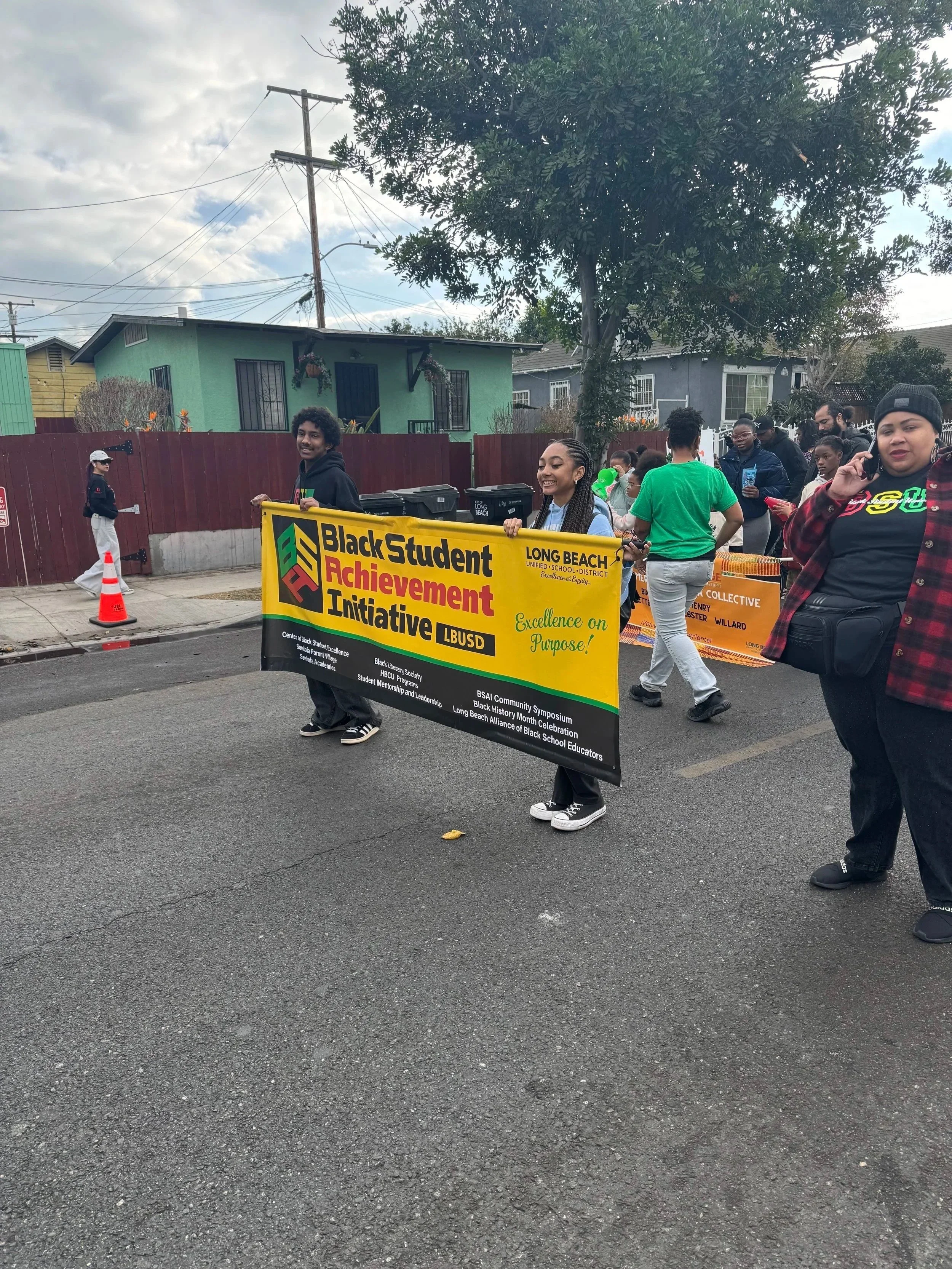
In Support of Long Beach Unified School District’s Black Student Achievement Initiative
Supporting our Black Student Achievement Initiative’s Sankofa Village with Drs. Norma Spencer and Elyssa Taylor-Stewart of Long Beach Unified School District in the Long Beach MLK Day Parade.

![Historically Black [emerging] HSIs Podcast](https://images.squarespace-cdn.com/content/v1/66b931f68b6d63797ec345c4/1737922990755-TAA2VS2GJPWI0X8QGUEK/podcast.jpeg)


Politics in the Classroom
The Chronicle of Higher Education
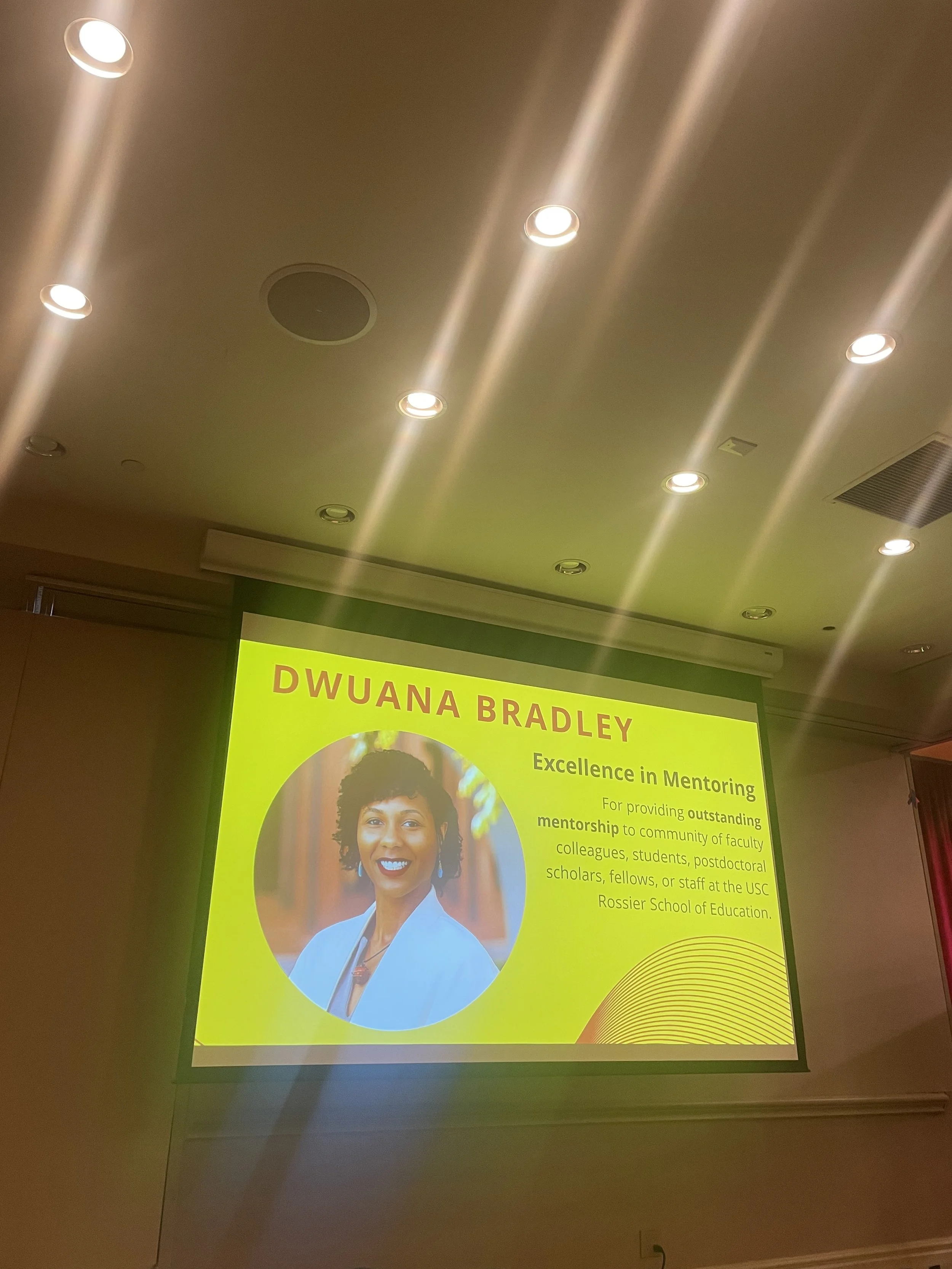
“To be woke is to have an understanding of the ways in which you are being oppressed,” said Dwuana Bradley of USC-Rossier to @EmmaJanePettit during a panel on politics in the classroom. Read more hear more here: https://chroni.cl/3LZd1HU
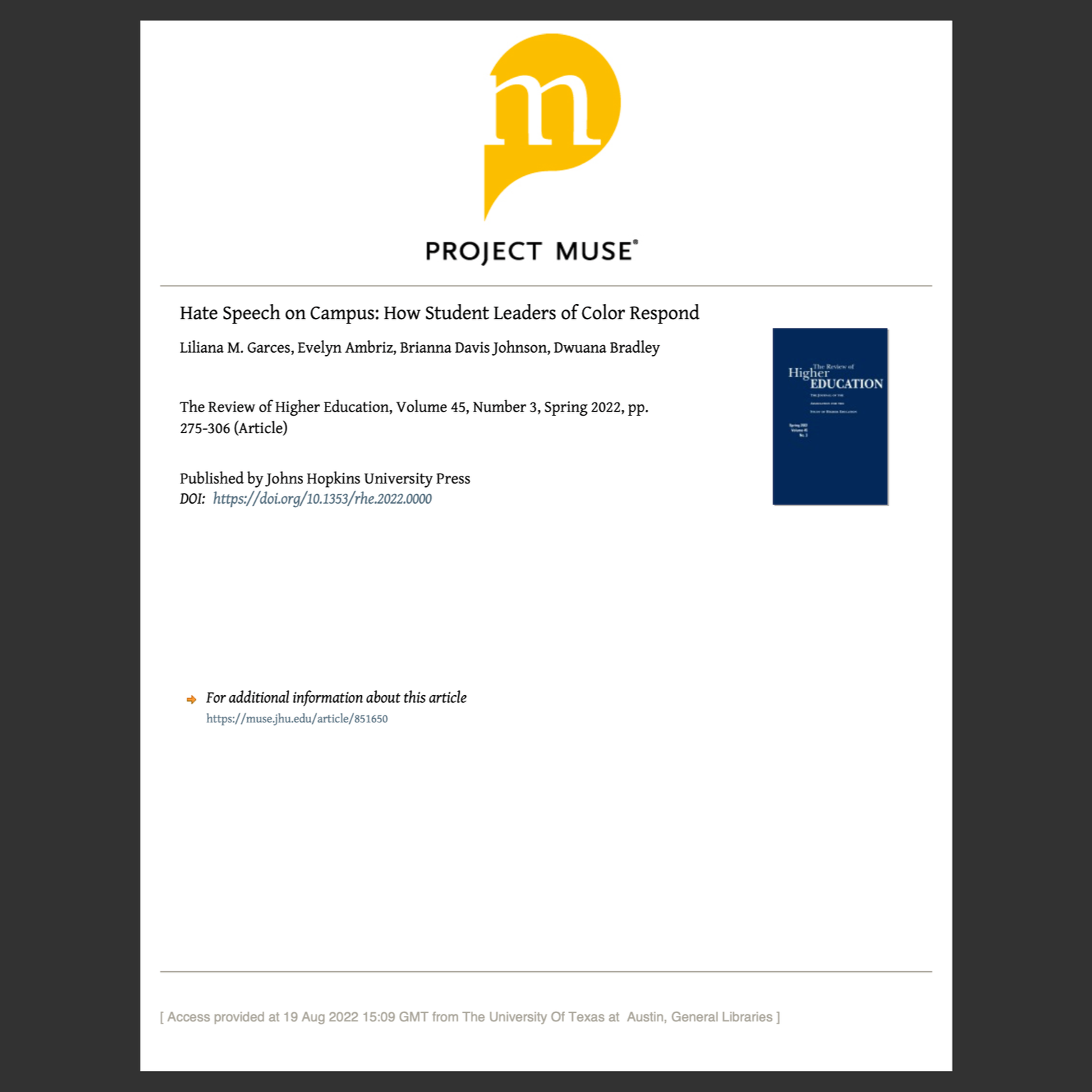
Hate Speech On Campus: How student leaders of color respond
Abstract: The spike of hate speech incidents on college campuses since the 2016 U.S. presidential election has compounded the racial hostility students of color face on historically White campuses. These ongoing incidents require institutions to respond purposively to address the harm students of color experience in their aftermath. Using an “inclusive freedom” framework that connects freedom of expression with goals of inclusion, we employ an em- bedded single-case study of 28 student leaders of color to examine how they responded to hate speech in light of insufficient institutional action. Findings illustrate how student leaders of color bolster inclusion by leveraging their freedom of expression following hate speech incidents. Through efforts that were taxing and left them feeling drained, students generated affinity spaces and fostered dialogue about the negative impacts of hate speech on campus. Their experiences illuminate how institutions can more deliberately promote principles of inclusion and freedom of expression in their responses to hate speech within legal boundaries. These intentional efforts require an antiracist approach to inclusion that attends to the systemic factors that foster hate speech in the first place and to the deleterious consequences for students of color when they encounter hate speech on campus.
Keywords: freedom of expression, hate speech, anti-racist inclusion, student leaders, marginalized populations